1. Although Siddhartha is seen as the perfect son, he is not content, and it is his family's admiration which pushes him to begin his journey. As a child, he is loved by all: he makes joy " leap in his father's heart", and bliss "leap in his mother's breast". Most children would be thrilled with such praise from their parents, but Siddhartha is dissatisfied. He feels he is defined by the opinions of others. Since those around them feel he is perfect and beyond reproach, he cannot motivate himself to seek further enlightenment. As he grows older, he begins to sense that his family's blind admiration is a symptom of their simplicity, noting that they have already imparted to him the "best of their knowledge", and have nothing more to give. Siddhartha feels stifled by the contentedness of the those around them. They do not strive to better themselves, and so he feels he must leave them to achieve his full potential.
12. During his time in the town, Siddhartha both envies and despises the unenlightened common folk, who he refers to as the "child people". He is disgusted by their values, which he feels are shallow and unworthy. They desire wealth and prestige, and squabble over trivial issues. To Siddhartha, such superficial wants are beyond contempt. He feels that by striving for material gains, one cannot achieve mental well being. At the same time, Siddhartha envies the child people for their ability to love. Despite his intellectual prowess, Siddhartha is not able to achieve true happiness because he does not allow himself to care for other beings. Even with Kamala, he cares only for the teaching she can offer him, and not for her as a person. Siddhartha's mixed emotions towards the child people are indicative of his confused spiritual state, and foreshadow his eventual epiphany about the "oneness" of everything.
18. Siddhartha's feelings for his son lead to great inner turmoil, and eventual change his outlook on life. Prior to meeting his son, Siddhartha was leading an entirely rational existence. Everything he knew and believed was based on logical sequences of thought. When his son enters his life however, he experiences the completely irrational feeling of love. He loves his son despite the abysmal treatment he receives in return. His experiences with his son change Siddhartha's view on the child people. He now understands how they can allow themselves to be guided by pure emotion, whereas before, he was disgusted by their inability to separate themselves from their feelings. When his contempt for the child people disappears, Siddhartha is finally able to extend his love of the universe to people. Before, he was delighted by the beauty of nature, but disturbed by the weaknesses of people, but after his son arrives, he learns to accept these weaknesses. And by accepting the weaknesses of others, his is at last able to accept his own pitfalls, allowing him to be truly content.
Friday, June 3, 2011

Wednesday, May 11, 2011
Dr. Jekyll and Mr. Hyde: On Philosophy
Dr. Jekyll and Mr. Hyde: On Philosophy Alex Smith
May 11th 2011
Most people would agree that inside every human being, there is some good, and some evil. No one is perfectly good, beyond all scrutiny. At the same time, no one is pure evil. Plato, Descartes, Hume and Freud’s views all in some way confirm this theory. To this end, the story of Dr. Jekyll and Mr. Hyde is a useful analogy in understanding human nature and morality.
For both Plato and Descartes, identity is a constant battleground. In Plato’s theory, the soul is divided into three parts: Reason, Desire, and Spirit. He believes Reason, or intellect, along with Spirit, must work to control Desire, the part of the soul that motivates instinctual drives. Similarly, Descartes believes identity a battle between body and mind, where the body is simply a mechanical machine, designed to provide a home for the mind. In his theory, all things intellectual and reasonable come from the mind, whereas all desires come from the body. Descartes goes even farther in his advice for how to manage these two parts, suggesting that to achieve balance, one must cut their reasoning mind off from the body all together. Descartes and Plato, as well as Christianity, are alike in that they portray desires as bad and evil, an attitude that is consistent with the Dr. Jekyll and Mr. Hyde analogy. In the story, Mr. Hyde is an exaggerated representation of Dr. Jekyll’s base desires. Mr. Hyde is portrayed as pure evil, which makes sense if one considers the strict Christian ideals of the time period in which the novel was written. As for morality, both Plato and Descartes advise that the way to achieve moral standards is to repress all desires. Once again, the analogy holds true, as Dr. Jekyll spends the entire novel attempting to remove himself from the evil Mr. Hyde.
Hume takes an entirely different stance on the idea of multiple parts of identity. In his reasoning, desires are not evil, but are instead a legitimate part of human nature. He believes intellect is present only to assist one in achieving their desires. For example, if one desires money the intellect steps in and formulates a plan on how to achieve that goal. When Hume’s theory is applied to the Dr. Jekyll and Mr. Hyde analogy, it brings about an alternative way of thinking about the story. Hume would say that Dr. Jekyll actually wants to release his baser instincts, and is tired of trying to suppress them. Thus, he uses his intellect to separate the parts of himself, allowing him to make choices free from moral restrictions. From Hume’s utilitarian perspective, this would not be moral, because morality for him is bring the most happiness to the greatest number of people possible, and Mr. Hyde’s nighttime antics certainly do not achieve this goal.
Freud’s views on self-identity are perhaps the most applicable to the Dr. Jekyll and Mr. Hyde analogy. According to Freud, people consist of three parts; the Ego, the Super Ego, and the Id. The Ego is the rational part that interacts with the outside world, the Super Ego is the moral conscience, and the Id is the instinctual desires that are present in everyone. Freud’s beliefs fit the story of Dr. Jekyll and Mr. Hyde perfectly. Dr. Jekyll represents the Ego. He is rational, intelligent, and interacts with the people around him in a pleasant and reasonable way. He also has a strong moral compass, or super ego. Contrastingly, Mr. Hyde has no conscience, is secretive, mysterious and violent. He symbolizes the Id. Like Plato, Freud believes that to be moral, the Ego and the Super Ego must work to control the Id. This also applies to the analogy. Throughout the novel, Dr. Jekyll expends a tremendous amount of energy trying to suppress Mr. Hyde and keep him from taking over completely.
While Plato, Descartes, Hume, and Freud have vastly different philosophical opinions, they agree on one thing: people are complex. They are motivated by a multitude of factors, and all these philosophers attempt to explain just what drives human beings. Dr. Jekyll and Mr. Hyde also strives to answer this important question, and is a valuable tool in understand human nature. Dr. Jekyll’s attempts to suppress the evil side of himself are timeless, and everyone can relate to it at some point during their lives.
Monday, April 18, 2011
Rome Essay
While the Cybil’s curse is correct in predicting Rome’s eventual decadence, this depravity was in no way the fundamental cause of its demise. In actuality, the fall of the Roman Empire can be attributed to massive social change, crippling economic issues, and pressure on its vast borders by other rising powers.
When Constantine made Christianity the official religion of Rome, he contributed to the empire’s downfall. The previous religious system of Roman gods and goddesses reinforced the power of the emperors, because rulers could claim to be chosen by the gods. When Rome converted to Christianity, however, they could no longer legitimately assert that they were backed by a higher power. Also, Christianity’s promise of a better life after death may have diminished the individual’s drive to succeed. If life on earth is seen merely as a transition period, then what one accomplishes in a lifetime is not nearly as important. Such an attitude would have had an effect on the economy as well.
Near the end of Rome’s thousand years of dominance, economic uncertainty plagued the empire. Inflation was rampant, with Diocletian’s attempt to lower prices having had the opposite effect. In an attempt to counteract this, Emperors like Nero took to simply commissioning the minting of more money. Debasing the currency means that coins lose their value, becoming important only for the amount of silver and gold they contain. By the last years of the empire, Roman coins contained only miniscule percentages of these precious metals. Additionally, the luxurious lifestyles of the emperors depleted the imperial coffers, leaving Rome unable to deal with the economic crisis. Furthermore, Rome’s main revenue was taxes, and with the borders being gradually eaten away, tax revenue was greatly decreased.
Most of the blame for Rome’s fall can be placed on outside pressures. At its peak, the Empire extended over most of Europe, and much of the Middle East. Without efficient transportation, borders of this size would be impossible to defend. When the immensely effective warrior Huns migrated into Europe, they displaced the many Germanic tribes living on the outskirts of the Roman Empire. In turn, these people began ravaging towns and cities inside the Roman border, gradually reducing the Empire bit by bit. Lastly, Rome was threatened from the East by the rising power of Parthia. Due to the other issues facing Rome at the time, Rome no longer had the military strength to defend against the Parthians and assert themselves as the great world power they once were.
Rome was certainly a self-indulgent society. Rulers spent massive amounts of much needed money on luxuries such as colossal entertainment facilities and extravagant temples. The fall of the Empire, however, cannot be blamed on this decadence. The fault for Rome’s demise lies with poor management, cultural division, and defensive failure, not with the depravity of a select few.
Monday, April 4, 2011
The Golden Age
Ancient Greece Alex Smith
March 30, 2011
Every great empire has contributed to society in some way. Egypt created the 365-day calendar, China invented the precursor to the modern compass, and the oldest known wheel came from Mesopotamia. None of these civilizations, however, can match the massive contributions Ancient Greece made to modern society. The Greeks redefined art, philosophy and politics, making Ancient Greece the Golden Age of civilization.
Ancient Greece was the first civilization to give art a high degree of importance. Previously, people were too busy struggling to survive, and didn’t have time or energy to devote to luxuries such as writing, art, or architecture. In the relatively stable environment of the city-states, however, these disciplines thrived. Homer, the epic poet, wrote the first literary works in the Western world. Not only were Iliad and Odyssey, enormous achievements for civilization, but they also provide modern historians with an important insight into daily life in ancient times. Another aspect of art in which the Greeks excelled was architecture. For example the Minoan palace of Knossos was remarkably advanced for its time, with a waste management system and aqueducts bringing fresh water from ten kilometres away. Furthermore, the Greek concept of using columns as part of both the structure and decoration is still popular today. Many modern buildings, such as government institutions, universities and libraries employ Greek columns. The Greeks also made significant contributions to sculpture. Prior to Ancient Greece, sculptures were vague and impressionistic, without much attention to detail. Greek culture, which placed a high value on athleticism, prompted sculptors to create strikingly realistic renditions of the human form.
In addition to redefining art, Ancient Greece produced several of the most prominent philosophers of all time. For example, Socrates, who is considered one of the founders of Western philosophy, was an Athenian teacher. He believed there should be strict differentiation between rich and poor, and that the more educated people should make all the decisions. He also thought of himself as a prophet, and was eventually tried and executed for heresy. Plato, Socrates’ student, also believed in the superiority of those he considered enlightened, as demonstrated by his analogy of the cave in his book The Republic. Plato suggests that if a group of humans were to be held in a cave, their idea of reality would be limited to what they can see inside the cave. If someone were to leave the cave, however, they would come back with knowledge of the outside world, and would try to leave the rest of the group out of the cave. Plato proposes that the group, afraid of change, would condemn the rebellious one, and execute him. This analogy reflects the persecution of Plato’s teacher, Socrates.
By far the most important innovation of Ancient Greece was democracy. While the first incarnations of democracy in place in Athens and Sparta were crude, they laid the foundations for the system of government used by most nations today. In Athens, thousands of people were directly involved in the democratic process. Even though only men over the age of thirty were considered citizens, every citizen had a chance to be part of the government, because seats in the assembly were selected through a lottery system. Although kings ruled Sparta, it also had a strong democratic influence. There were always two kings at a time, ensuring that no one person became an all-powerful tyrant. All legislation proposed by the kings had to be approved by the elected assembly, which had the power to veto any bill. Like Athens, only adult men could vote in Sparta.
The Ancient Greeks redefined the world they lived in. They created works of art still marveled at today, fostered some of the greatest thinkers of all time, and invented the most popular system of government in the world. If ancient Greece had not thrived thousands of years ago, civilization today would be very different.
Thursday, June 4, 2009
Mystic and Rider - Sharon Shinn
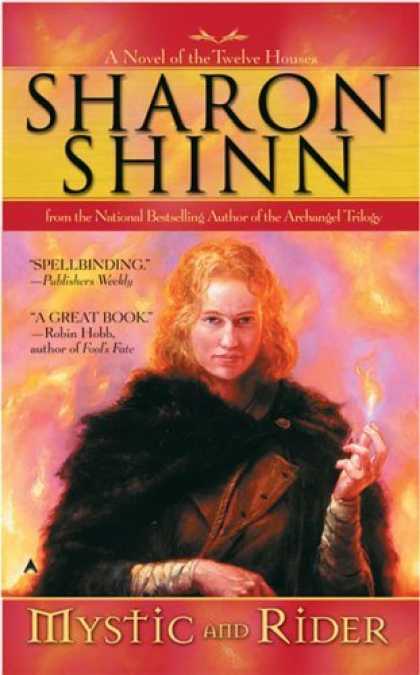 Mystic and Rider
Sharon Shinn
4 stars (out of 5)
Opposites attract, especially when those opposites are extreme.
Mystic and Rider, by Sharon Shinn, is a beautifully written tale of magic and rebellion with a strong underlying romance. Throughout the novel, the impending rebellion creates a perpetual tension, keeping the book moving at an energetic pace. The two main characters, who start out enemies, slowly develop affection and eventually love for each other. The contrast within this pair is elegant and sophisticated, lending the story a vibrancy which is seldom seen in a fantasy novel. Despite the beauty of this romance, Shinn refuses to let it overpower other elements of the novel. As a result, the book gains a larger audience, appealing to fantasy and romance lovers alike. Mystic and Rider is multi-dimensional story of love, friendship and rebellion. It displays a depth seldom seen in fantasy novels which will keep the reader enthralled from start to finish.
1. What do you think of the Romance between Senneth and Tayse?
2. Of the powers the characters have, which would you like to possess? Why?
Those Who Trespass Against Us - Toni O'Keeffe
 Those Who Trespass Against Us
Toni O'Keeffe
4 1/2 stars (out of 5)
Legal systems often struggle to protect the masses at the cost of the individuals. While it is often very disturbing, Those Who Trespass Against Us, by Toni O'Keeffe, chronicles the life of one orphan at a time when the Irish government was essentially ignoring orphans. His life story, told through a very well written novel, will capture readers' hearts and minds from the very first page. Walter O'Keeffe, the author's father, and the main character of the novel, is hard not to fall in love with. The reader will feel an instant attachment to his childish speech and often crude behavior. For exactly this reason, the horrific conditions "Wattie" and his brothers are subjected to are particularly heart wrenching. Readers will want to keep reading simply to see if his life will ever improve. And it does. Slowly, through optimism and determination, Wattie struggles to improve his life, if only little by a little. It is this prevailing hope which makes the novel the touching memoir that it is. Those Who Trespass Against Us is an engaging but disturbing portrait of the life of Ireland's forgotten children. Toni O'Keeffe provides insight into what it means to be neglected and will enrich the perspectives of any reader.
1. Do you think Wattie's attitude was responsible for improving his life? How so?
2. Why do you think the Irish government chose to turn a blind eye to the treatment of children at residential schools such at Greenmont?
1. Do you think Wattie's attitude was responsible for improving his life? How so?
2. Why do you think the Irish government chose to turn a blind eye to the treatment of children at residential schools such at Greenmont?
Hunted - P.C. Cast & Kristin Cast
 Hunted
P.C. Cast & Kristin Cast
2 1/2 stars (out of 5)
Certain genres should not, under any circumstances, be combined. While Hunted, by P.C. and Kristin Cast, might appeal to the post-twilight preteen crowd, its attempt to combine fantasy and social drama results in an unappealing, shallow, mess of a novel. What could have been a moderately exciting plot is ruined by the bursts of teenage drama which appear throughout the book. Such interruptions effectively prevent the reader from developing any degree of interest in the storyline. In addition to the novel's lack of substance, the author fails to develop the characters, keeping the reader from acquiring an attachment to them. Not only are the characters shallow, but their lack of depth is reflected in the relationships between them. Characters who appear to have a strong friendship periodically turn on each other for seemingly trivial reasons, causing them to lose any respect the reader may have gained for them throughout the novel. With Hunted, P.C. and Kristin Cast were obviously writing to fill a niche between Stephenie Meyer's Twilight and Cecily von Ziegesar's Gossip Girl. However, readers looking for a more complex novel should steer clear of Hunted.
1. Do you think combining the two genres was a good idea? Why or why not?
2. Did you enjoy the other novels in the series more than this? Or less? Why?
1. Do you think combining the two genres was a good idea? Why or why not?
2. Did you enjoy the other novels in the series more than this? Or less? Why?
Wednesday, June 3, 2009
City of Glass - Cassandra Clare
 City of Glass
Cassandra Clare
4 stars (out of 5)
The difference between good and evil lies not in a person's background, but in their actions. Although it is science fiction, City of Glass by Cassandra Clare, carries this message while providing a riveting conclusion to the Mortal Instruments trilogy. City of Glass is a many faceted novel, containing elements of fantasy, science fiction, and romance. Clare's talent for weaving these very different threads into one story gives the novel a universal appeal. City of Glass neatly ties up all the loose ends which occur throughout the series. However, it does so in such a way that the conclusion does not come across as over done. The novel chronicles the growth of its characters, making it as much a coming of age story as a science fiction novel. Its characters fight many internal battles even as they face the external ones. City of Glass demonstrates the ability of any individual to triumph over the doubt within them.
1. What do you think was the turning point for Jace?
2. What do you think will happen to the newly formed relationship between the shadow hunters and the downworlders? Why?
Tuesday, May 26, 2009
Slumdog Millionaire (Q and A) - Vikas Swarup
 Slumdog Millionaire
Vikas Swarup
5 stars (out of 5)
Even seemingly random events happen for a reason. While it is sometimes very dark, Slumdog Millionaire, by Vikas Swarup illustrates the potential of everyday occurrences to change a person's life. Throughout the novel, the Swarup portrays with terrible clarity, horrible conditions of the slums where the characters reside, giving the reader some grasp of the lives many people live. The author develops each character into a thriving personality, lending the book a spirit and animation which propels the story beautifully. Lastly, the seemingly random order in which the book is written enthralls the reader from start to finish as the hero goes from boy, to man, and back to boy again. Slumdog Millionaire is a realistic and sometimes disturbing portrait of life in India's slums. However, at the same time, it is a story of perseverance and success, demonstrating the many types of intelligence in our world.
1. Why do you think Vikas Swarup chose the write this book in such a random order?
2. How does Salim's character contribute to the development of the main character?
1. Why do you think Vikas Swarup chose the write this book in such a random order?
2. How does Salim's character contribute to the development of the main character?
Slumdog Millionaire is set in the Dharavi Slum in India.
Monday, May 25, 2009
The Chronicles of Faerie - O.R. Melling
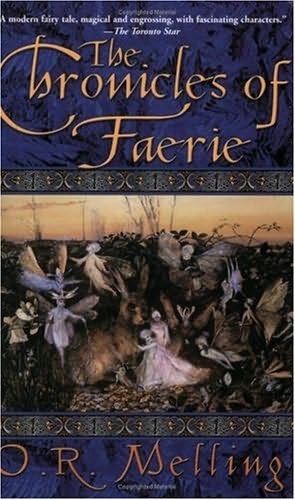 The Chronicles of Faerie
O.R. Melling
3 1/2 stars (out of 5)
What we gain from the world around us depends on how we see it. Despite being aimed at younger readers, The Chronicles of Faerie by O.R. Melling, carries a message for readers of any age: the world is best viewed with the innocence of youth. Melling utilizes a simplistic style of writing which adds to the youthful feeling of the novel. The sporadic and often scattered storytelling gives the book a playful feeling, even as its characters encounter difficult situations in their own lives. The true genius of the novel, however, is the way Melling infuses her characters with an eternal youth, lending the entire story a life of it's own. The Chronicles of Faerie is full of enchantment, beauty, and wonder. It challenges the reader to see the magic which is all around us.
1. Of the three books contained within this novel, which one is your favorite? Why?
2. How does the cover art of this book relate to the style of the story?
1. Of the three books contained within this novel, which one is your favorite? Why?
2. How does the cover art of this book relate to the style of the story?
Sunday, May 24, 2009
Nineteen Minutes - Jodi Picoult
 Nineteen Minutes
By Jodi Picoult
4 stars (out of 5)
Horrendous events can occur where you least expect them. While Nineteen Minutes would be too shocking for some, Jodi Picoult tells an emotionally charged tale of heartbreak, torment, and retaliation. From the very first lines of the book, she highlights the contrast between the normality of everyday life and the awful reality of the school shooting which is the central event. The variation which results keeps the book moving at a riveting pace. Although the shooting happens at the beginning of the book, Picoult manages to retain an element of mystery which enthralls the reader on many levels. The greatest triumph of the novel, however, is the way in which the author enables the reader to feel sympathy for a character who is otherwise easily hated. Picoult provides an insight into the shooter's motives which turns him from monster to victim, giving the book a depth that would otherwise be lacking. Nineteen Minutes illustrates how tragedy can blossom from the most unlikely sources. Its heart wrenching plot and shocking conclusion will force the reader to redefine their beliefs about the appalling events which occur in the lives of those around us.
1. Do you feel sorry for Peter? Why or why not?
2. Why do you think Josie cannot remember what happened?
A brief history of school shootings around the world.
1. Do you feel sorry for Peter? Why or why not?
2. Why do you think Josie cannot remember what happened?
A brief history of school shootings around the world.
Friday, April 3, 2009
The Birth House - Ami Mckay
 The Birth House
By Ami McKay
4 1/2 stars (out of 5)
Small town Maritime life in the 1800s was far from tame. Although it is fictional, Ami McKay's The Birth House paints a vivid picture of the life lead by Canadian women who lived during the revolutionary transition of medicine from faith to science. Its' strong, well developed characters propel the storyline forward in a style which is both riveting and emotional. The story's heroine, the midwife Dora, fights for what she believes in, while still maintaining her often soft and vulnerable nature. Largely based on facts, The Birth House reveals the well documented merits of natural methods of medicine. As the women of the community start to follow the new doctor in town, who preaches science as the new age of childbirth, they turn their backs on the midwifery they have entrusted their children to for generations. Throughout the book, there are underlying currents of the sexism and mistreatment of women that was commonplace for the era. The characters face the dark truths of the time, such as rape, child abuse, and oppression. The Birth House is and engaging story with a foundation rooted in fact. Bringing us valuable insight into an era far removed from our own, it reveals that despite these differences, the people of these trying times face the same question that is looming over us today. How can we thrive in a world which is changing faster than we can comprehend?
1. What did you think of the character of the doctor? Was he justified in trying to replace Dora as the caregiver for the town?
2. Dora is a very complex character. Why do you think the author chose to portray her as having a very soft side, even though she is such a strong person?
An article on the arrival of university educated doctors in Nova Scotia.
An article on the arrival of university educated doctors in Nova Scotia.
Subscribe to:
Posts (Atom)